Vacuum Decay vs. Bubble Leak Testing
Manufactured by Burhani Engineering Technology
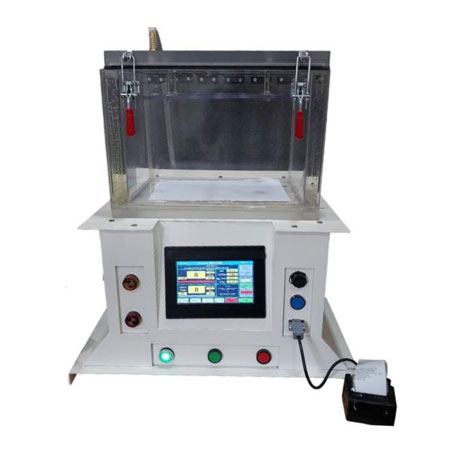


Company Overview
Burhani Engineering Technology designs and manufactures advanced package integrity testing solutions to support quality control, validation, and regulatory compliance across food, pharmaceutical, and medical packaging industries.
Introduction
Vacuum Decay and Bubble Leak Testing are two widely used methods for evaluating package integrity. Each technique offers distinct advantages depending on package type, sensitivity requirements, and regulatory expectations. Burhani Engineering Technology provides reliable systems for both methods, enabling manufacturers to select the most suitable solution for their application.
Vacuum Decay Testing Overview
Vacuum Decay Testing is a non-destructive, quantitative leak detection method that measures pressure changes within a sealed test chamber. The method detects leaks by monitoring vacuum loss over a defined period, offering high sensitivity and repeatable results without the use of water.
Bubble Leak Testing Overview
Bubble Leak Testing, also known as bubble emission testing, is a visual, vacuum-based method where the package is submerged in water. Leaks are identified by the presence of continuous air bubbles escaping from the package, making it a simple and effective method for detecting gross leaks and seal failures.
Key Differences
Vacuum Decay Testing provides quantitative results and higher sensitivity for micro-leak detection, while Bubble Leak Testing offers clear visual confirmation of leak location. Vacuum Decay is suitable for dry, high-throughput, and automated testing, whereas Bubble Leak Testing is ideal for routine inspection, validation, and visual demonstration of seal integrity.
Working Principles
In Vacuum Decay Testing, the package is placed in a sealed chamber and vacuum is applied. Any pressure increase over time indicates a leak.
In Bubble Leak Testing, the package is submerged in water and vacuum is applied, causing air to escape visibly through leaks in the form of bubbles.
Applications
Vacuum Decay Testing is commonly used for sterile medical devices, pharmaceutical packaging, and high-sensitivity applications.
Bubble Leak Testing is widely used for flexible food packaging, snack bags, medical pouches, and general quality control testing.
Advantages of Vacuum Decay Testing
High sensitivity and repeatability
Non-destructive and dry testing method
Suitable for automation and data logging
Ideal for regulated and validation-driven environments
Advantages of Bubble Leak Testing
Simple and cost-effective testing method
Clear visual identification of leak location
Minimal setup and operator training required
Effective for detecting gross leaks and seal defects
Selection Guidance
The choice between Vacuum Decay and Bubble Leak Testing depends on packaging type, required leak sensitivity, production volume, and compliance needs. Burhani Engineering Technology assists customers in selecting and configuring the most appropriate system for their specific application.
Optional Customization
Both testing systems can be customized with digital vacuum controls, data recording features, custom chamber sizes, and manual or semi-automatic operation modes based on customer requirements.
Industries Served
Food and Beverage Packaging
Medical Device Manufacturing
Pharmaceutical Packaging
FMCG Products
Quality Control and Validation Laboratories
After-Sales Support
Burhani Engineering Technology provides complete installation support, operator training, calibration assistance, and reliable after-sales service to ensure long-term system performance.
Manufacturer
Burhani Engineering Technology
+91 9677296252



No comments:
Post a Comment